|
| The Pericardium |
I was trying to give my heart to my cardiologist, let’s call him Dr. Sing.
“Why would I want your heart?” he asked in his soft, sing-songy voice, a little smile on his round, brown face.
“For research,” I said, holding out my hands as if they were holding the very heart I was offering.
“I’m not doing any research,” Dr. Sing protested. “Besides, there are plenty of hearts to be had if one is to be looking.”
“But my heart has been without a
pericardium for over forty years now,” I said. “Surely that means something to medical researchers.”
I had chronic
pericarditis as a young man and my pericardium had to be removed. Without going into all the gory details, think of the pericardium as a partially inflated balloon into which the heart is shoved. The balloon, the pericardium, forms around the heart and acts (I’m guessing here) as a kind of shock absorber. Pericarditis is an inflammation of the pericardium. It can have a variety of causes. Mine was caused by an unknown and very persistent virus. After many episodes, my pericardium had begun to constrict the heart and so had to be removed. Think of peeling a peach; a peach that has a lot of arteries attached to it.
 |
| Performing a pericardiectomy. That evil looking device is a rib stretcher. |
“Medical researchers are very much acquainted with pericarditis,” Dr. Sing said. “In fact, last week I had a man come in with chest pain and as soon as I listened to his chest I knew what it was.”
“You heard a rub?” I said, showing off my knowledge of the so-called pericardial friction rub caused by the outer and inner walls of the inflamed pericardium rubbing against each other.
“Yes, of course,” Dr. Sing said, handing me a slip of paper. “This is an order for a chest X-Ray.”
I took the X-Ray order without looking at it. I’d derailed my argument by trying to show off. I tried to get back to it. “Yes, there’s a lot of information on pericarditis, but what about information on what happens to the heart when it has to get along without a pericardium?”
“Well, your heart seems to have done just fine,” Dr. Sing said. “Look at your stress test.”
The stress test involved hooking me up to an EKG and having me run on a treadmill, on which Dr. Sing kept increasing the incline until I was about to fall off the back. When I quit, breathing hard and drenched in sweat, Dr. Sing said, “I’m disappointed.”
“Why?” I asked. “I went longer than I did last year. What was it, eleven minutes? More?”
“Well, I had a man do almost twenty minutes,” Dr. Sing said. “Of course he was half your age and a tri-athlete,” he said, chuckling.
He was beginning to get on my nerves.
I was seeing Dr. Sing because I had been experiencing a recurrence of upper back pain, mostly under my left scapular. I have had chest and back pain on and off ever since my pericardiectomy in 1965. My doctors over the years had explained it as very probably inflammation of pericardial tissue remaining around major arteries.
“They can’t get everything,” one doctor told me, squeezing my shoulder reassuringly.
When I asked about why I got back pain from inflamed tissue around heart arteries, I was told the pain was “referred.”
I learned that referred pain happens when nerve fibers from one region of the anatomy converge with nerve fibers from another region at the spinal cord. Nerve impulses apparently jump the track and cause, for example, that horrible, aching pain that runs down the arm during a heart attack.
 |
Pain felt in one area of the body does not always represent where the problem is because the pain may be referred there from another area. For example, pain produced by a heart attack may feel as if it is coming from the arm because sensory information from the heart and the arm converge on the same nerve pathways in the spinal cord.
|
But I digress. After all these years of living without a pericardium, I was wondering why we have it in the first place. Maybe, I thought, it’s vestigial, like the appendix. If so, removing it would probably have about as much impact as removing the appendix, although recently, medical researchers may have changed their mind about the usefulness of the appendix, describing it as a little factory that manufactures “good bacteria.” Surely the pericardium has a useful function, as well. Maybe it manufactures good acne. Wouldn’t it be useful to know what happens when a person has to get along for most of his or her life without a pericardium?
 |
The pericardium is said to be a tough, two-layer membranous sac enclosing the heart. The outer layer, called the fibrous pericardium, protects the heart from contact with the chest wall, ribs, sternum, and lungs. The pericardium wraps completely around the heart, extending around the bases of the great vessels; the aorta, superior and interior vena cava, pulmonary artery and vein as they arise from the heart. Two ligaments attach the top of the pericardium to the back of the sternum. Other ligaments loosely connect the bottom of the pericardium to the diaphragm. These structures anchor the heart in its place in the chest.
|
I started researching the question of what effect removal of the pericardium might have and came across an abstract in the International Journal of Cardiovascular Medicine that began, “The removal of the pericardium does not appear to have…” This could be what I was looking for. I brought up the article itself and read on. “The removal of the pericardium does not appear to have any deleterious effect in the normal dog.” Well, that was a start, wasn’t it?
A
study performed in Spain (Departamento de Cardiología y Cirugía Cardiaca, Hospital de la Santa Creu i de Sant Pau, Barcelona, España) found that of those patients who survived the initial procedure (16% did not), 82% were still alive after 9 years, and 64% after 10 years. Pericardiectomy improved or alleviated their symptoms. A
study performed in France of long-term survival of pericardiectomy patients was not so positive. It found that pericardiectomy allowed a clear functional improvement, but following pericardiectomy more than 60% of patients died within 10 years of the diagnosis being made.
A
Japanese study followed 24 post-pericardiectomy patients for up to 27 years, with surgeries taking place between 1966 and 1990. Survival rates were 85% at 5 years, 67% at 10 years, and 58% at 15 years. As in other studies I reviewed, the causes and complications encountered in the patient population varied considerably, making any definitive conclusions difficult.
A
retrospective analysis of the records of 60 patients who underwent
pericardiectomy over a 10-year period (1980 to 1990) at Johns Hopkins showed differential operative and long-term survival rates based on the cause of the disease. A history of malignancy, previous pericardial procedure, and preoperative New York Heart Association class IV were found to be predictors of poor survival. The operative mortality rate for pericardial effusion and constriction was 4.2% and 5.6%, respectively. Follow-up (median follow-up, 56.9 ± 38.2 months) was obtained on 56 patients (93.3%). Actuarial survival at 1 year, 5 years, and 10 years for all patients was 82.1% ± 5.1%, 71.7% ± 6.7%, and 59.8% ± 12.2%, respectively. All patients who underwent operation primarily for effusion with associated pain were found to be alive and had improved functional capacity without steroid use. The researchers concluded that pericardiectomy can be performed with low mortality and can result in good long-term survival and improved functional capacity. Patients who are seen primarily with pain refractory to steroid therapy can be relieved of symptoms with operation.
The most interesting study from my standpoint was one performed at the Cleveland Clinic, in Cleveland, OH, titled:
Constrictive pericarditis (CP): etiology and cause-specific survival after pericardiectomy. In this study, the etiology of CP was idiopathic in 75 patients (46%), prior cardiac surgery in 60 patients (37%), radiation treatment in 15 patients (9%), and miscellaneous in 13 patients (8%). Long-term survival after pericardiectomy for CP was found to be related to the underlying etiology, LV systolic function, renal function, serum sodium, and PAP. The relatively good survival with idiopathic CP emphasizes the safety of pericardiectomy in this subgroup.
One has to be careful about how to interpret findings that survival rates after pericardiectomy are best when the cause of pericarditis is "idiopathic," i.e., unknown. This isn't a case of, "The less we know, the better your chances." What this means to me is that ruling out known serious illness/injury as an underlying cause of pericarditis, such as tuberculosis, cardiac surgery, cancer, etc., results in a patient population for whom pericardiectomy is more straightforward and less likely to result in follow-on complications, thus improving survival.
&&&&&
I woke up on a sunny Tuesday morning in July of 1962 at Chanute Air Base in Rantoul, Illinois, feeling tired and slightly feverish. I had pain in my left shoulder and a dull ache in the middle of my chest. I dressed and went to my Aircraft Maintenance Officer’s training class. By noon, the ache in my chest was sharp and constant, and I was having trouble breathing. I went to Sick Call at the infirmary, where they checked my temperature (97), blood pressure (145/80), and pulse (88), listened to my chest (“clear”), and sent me home with a tube of Bengay heat rub.
By 1700 that evening my chest pain was severe and got worse if I tried to take a deep breath. I couldn’t lie down, because the pain became much worse and breathing was more difficult. It was a struggle getting back to the infirmary, as any exertion caused greater pain. When I shuffled into the infirmary gasping for breath they immediately put me in a wheel chair and took me to an examining room, and then admitted me with, “Chest pain, undetermined etiology.”

It was two or three days before a doctor brought in from the teaching hospital at the University of Illinois at Urbana-Champaign diagnosed my problem as pericarditis by identifying the rubbing sound he heard while listening to my chest as a “friction rub,” the sound of the inner and outer layers of the inflamed pericardium rubbing against each other. This was my first case of pericarditis. I was 24 years old. I would have another 9 episodes of pericarditis before my pericardium was removed at Wiesbaden AFB, Germany, in January of 1965.
&&&&&
I was a 2nd Lt when I first came down with pericarditis at Chanute. I had a second episode while there, was admitted to the hospital again, and after a few days, was permitted to attend class during the day and return to the hospital in the evening. I completed training with the class behind my class and received my assignment to the 36th Tactical Fighter Wing at Bitburg Air Force Base, Germany.
Medical tests failed to reveal the underlying cause of my pericarditis. It was recorded as "idiopathic," and presumed to be viral in nature. An interesting footnote was appended to the medical record, which stated that I had been quartered with Arab officer maintenance training students and one of them, an "Ahmed Gandi," had been hospitalized with "precordial pain." He was in the hospital 2 weeks, and then again a second time for 4 weeks. He did not finish the training course, and nothing more was known about his condition. The doctor at Wiesbaden preparing the clinical record preceding my pericardial window, an F. Steichen, wrote that, "It might be interesting to write to Chanute AFB Hospital to get the diagnosis of Gandi's disease." It's puzzling to me why Dr. Steichen would think this information relevant, since everything I've read indicates that viral pericarditis is not contagious. In any case, to my knowledge, no follow up was done on the matter.
I had my first "overseas attack" of pericarditis on the 15th of February 1963 and this time I told the examining physician at the hospital exactly what the diagnosis was. He had my medical records and gave me no argument. While hospitalized I developed an effusion and was treated with ACTH (prednisone).
 |
| Air Force Hospital, Wiesbaden, Germany |
On March 5th, I was transferred to Wiesbaden, the main hospital in Germany, for further evaluation. I was there for almost a month undergoing one test after another; blood work, EKG, X-Ray, and lymph node, bone marrow, blood vessel, and muscle biopsies. Finally, I underwent surgery to make a "
window" in the pericardium, and allow doctors to obtain pleura and pericardial tissue samples, and to preclude constriction. All test results were normal, except for fibrosis of the pericardium, which was caused by scarring due to pericarditis.
I was returned to Bitburg to convalesce from surgery and returned to full duty after two weeks. I had another attack of pericarditis on the 24th of April, then on the 19th of November, and the 14th of December. My next attack wasn't until August 3rd, 1964. I married my nurse in September 1964. We were spending so much time together we thought we might as well formalize the arrangement.
When I wasn't in the Bitburg Air Base hospital, I was working in my specialty as an aircraft maintenance officer, first on the flight line, then as Chief of Maintenance, then as an assistant maintenance control officer. I worked 12-hour days regularly, and we were subject to frequent alerts, when the horn would sound at 0300 hours and we'd sprint to the flight line, not knowing whether it was another drill, or whether the Russians were charging across the Fulda Gap.
My frequent bouts with pericarditis effected me in three ways. First, I was less physically fit than I had been going into the Air Force. I'd been active in sports and was in excellent physical condition. I enjoyed running, but after several episodes of pericarditis, I found I had no "umph" in my legs. I remember starting to run on the air base track and staggering to a stop, bent over, hands on my knees. It was a very discouraging experience.
Second, my officer evaluations had been downgraded from outstanding to excellent by the reviewing officer, and my recommendation for a Regular Air Force Commission had been refused by the reviewing officer, on both counts because of my frequent attacks of pericarditis. I'd been hospitalized or confined to quarters a third of the time I'd been at Bitburg. I couldn't blame the reviewing officer for thinking that my boss was inflating my evaluation.
 |
| Bitburg AFB Hospital |
Third, I was for the first time in my life concerned about my health and the implications for my future and that of my family. My new wife was pregnant with our first child. If the Air Force decided I was physically unfit for duty, what then?
&&&&&
 |
The Superior Vena Cava and the Inferior Vena Cava both bring deoxygenated blood to the heart. Generally, the Superior Vena Cava carries blood from the upper part of the body while the Inferior Vena Cava carries blood from the lower part of the body. Like all veins, the Superior and Inferior Vena Cava are made of smooth muscle. Unlike arteries which require their elasticity to withstand the pumping of the heart, veins are more inelastic. These two large major veins feed into the right atrium.
|
On the 25th of January 1965, "through a left thoracotomy a pericardiectomy was performed with removal of the pericardium to include the area of the superior and inferior vena cava, anteriorly and posteriorly and to the base of the
heart."
The surgeon performing the procedure was Dr. Dale E. Dominy, a 39 year-old Air Force major. In his operation report he wrote, "the left pleural space was entered through a left anterior chest incision [Dr. Dominy noted that I already had a previous right thoracotomy] with finding of considerable adhesion of lung to pericardium." Dr. Dominy went on to describe the surgery as, "excision of the pericardium to the region of the right phrenic nerve, the aorta and pulmonary artery..." Dr. Dominy stated that, "the left phrenic vessels and nerve were preserved."
Dr. Dominy wrote that I tolerated the procedure satisfactorily and was taken to recovery in excellent condition. My wife, who saw me leave surgery after what she thought was 4 to 6 hours, said I looked, "gray."
I returned to Bitburg to convalese, and then returned to duty. Unfortunately, my struggle with pericarditis was not over.
Three months after my pericardiectomy, March 1965, I was readmitted to the Bitburg hospital with pericardial pain. I was again treated with ACTH, my condition improved quickly, and I was released. I was told that whatever virus had caused the pericarditis in the first place was probably attacking bits and pieces of remaining pericardial tissue. The doctor told me, "They can't get everything."
I had another episode of pericardial pain in October 1965, and was treated as an outpatient.
In May of '66 I was notified that I had again been disqualified medically for a regular commission. Also in May of that year I was granted a waiver by the flight surgeon and given medical clearance for an
altitude chamber flight.
In June of 1966, 3 months prior to my reassignment date, I experienced pain in my right shoulder, across my chest, and into my rib cage. Deep breathing exacerbated the pain, as did lying flat. This was all very similar to my experience before the pericardiectomy. Serial EKGs revealed "evolutionary changes of acute pericarditis with minimal improvement noted in later tracings." Not a good sign.
At the beginning of July1966, I was transferred to Wiesbaden Hospital for further evaluation and possible medical board. The prospect of being discharged from the Air Force at this time was distressing.
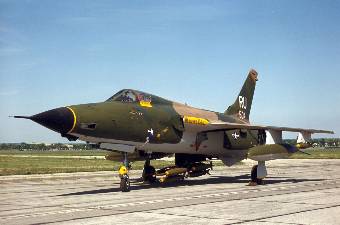
I had been responsible for a major transfer of our three squadrons F-105 Thunderchiefs to Vietnam and replacement by the F-4 Phantom. This was a massive undertaking, because we had to ensure each aircraft had undergone periodic maintenance and been prepared for overseas flight. At the same time we had to bring in the F-4s, run them through acceptance inspection, and schedule any maintenance necessary. While doing this, we had to fly regular sorties as part of our mission. I worked long hours and spent most nights with scheduling charts spread on the living room rug trying to work out the details of the transfer and replacement (if only I'd had today's Mac and an Excel spreadsheet).

I had been receiving outstanding performance evaluations (this time not overturned by the reviewing officer), I had been promoted to 1st Lt, and then captain, and I had been selected to attend the
Air Force Institute of Technology (AFIT) to study for an advanced degree in human factors engineering at Texas Tech starting at the beginning of the school year, September 1966. My wife was pregnant with our second child and was expecting in October.
Thinking myself fit for world wide duty, I had also volunteered for Vietnam, something I had yet to tell my wife. It didn't seem that this was going to be a problem.
My wife and I decided that she and our 18-month old son should return to the States ahead of me and stay with her parents while I underwent the medical board at Wiesbaden. It was a very difficult trip for her. For me, it was a month of examinations, consultations, waiting, and wondering what the doctors at Wiesbaden would determine about my future in the Air Force.
&&&&&
The Wiesbaden medical staff decided that I was fit for worldwide duty, so informed my commander, and my permanent change of station (PCS) orders were cut, and was on a flight to McQuire Air Force Base, where I'd shipped my Volkswagen Beetle 2 months earlier.
Amazingly, the VW started right up, and I drove immediately to Florida to see my wife and son, and then on to Lubbock, Texas, to start school at Texas Tech, leaving my wife in Florida with her parents and under the care of her brother, who was a doctor.
 |
| Texas Tech |
I checked into the BOQ and fell into bed. I needed sleep. But there was a lot to do and I was up early the next morning and making up a list of action items. I had to register at Texas Tech, find a house, manage shipment of my household goods, meet with my advisor, and come up with a slate of classes that would meet leveling requirements (my BS in Aeronautical Engineering didn't cover all the prerequisites for my degree work in IE/Human Factors), and keep me on schedule for degree completion in the time allotted by AFIT (1966-68).
I kept in virtually constant touch with my wife and was troubled to learn that she'd had some bleeding and had been put on bed rest awaiting delivery. She was bored, but otherwise seemed okay, or at least she made me believe that was the case.
My Air Force sponsor helped me locate a modest, three bedroom house in a quiet neighborhood and I located my household goods and had them shipped. In the meantime, I started attending classes. Our second son was born 5 weeks prematurely on September 19, 1966. He was being kept in the hospital for observation. My wife was okay.
On October 25, 1966, I was required to report to the local AFIT commander, who handed me a letter from the Air Force Surgeon General disapproving the recommendation of the Wiesbaden medical board and requiring that I undergo another medical evaluation board. My fight to continue my Air Force career without my pericardium was not yet over.
Continued -- click here.