Showing posts with label campaign finance reform. Show all posts

Sunday, June 26, 2022

The Salmon are going extinct and we won't be far behind

Coho salmon, here in full vivid spawning colors. One of many species of wild Pacific salmon in danger of extinction. (Jessica Newley)

I remember when I was younger -- around the time of the Spanish Civil War -- I used to listen to my parents and their friends talk with no little animation, about how the world was “going to hell in handbasket.” I never understood what that meant. What was a handbasket, and how did one go anywhere in a "basket," let alone to hell? On top of that, I didn’t think things were so bad when I was growing up in Los Angeles, California (the fact that World War II was going on during my early childhood seemed to have escaped me).

I still don’t know where that particular phrase comes from, but I tend to agree with the sentiment now. Maybe people my age just get cranky -- feel as though nothing’s as good as it used to be. But maybe not. Maybe there’s something to that observation. I’ll tell you this – fishing’s not as good as it used to be. Here in my adopted state of Washington and in the Pacific Northwest generally, native salmon are on the brink of extinction. So, that’s not a cranky old feeling. That’s a fact.

I’ll tell you something else. When I was growing up in Los Angeles back in the mid-Twentieth Century, you could smell the orange blossoms in the spring, and you could look up in the night sky and see the millions of stars, then wake up in the morning and see the San Gabriel and San Bernardino Mountains off to the East. Unless you think smelling exhaust fumes and squinting out with burning, red eyes at an orange-brown sky is a good thing, then I expect you’d agree things were better in LA back then.

But these are just my personal recollections. And they probably color my thinking about a lot of other things – like the way we live, the way we bring up our children, the way we run our country. Things like that.

It never would’ve occurred to me when I was graduating from the University of Southern California in 1961 that kids going to school today, Elementary School at that, would be searched for weapons because 12-year olds and younger are shooting each other to death. Come to think of it, it also never occurred to me that wealthy people -- investment brokers, celebrities, and the like -- would bribe test administrators and college coaches in order to get their kids into USC.

I used to worry about my kids when they were growing up in the Seventies and Eighties, but I will tell you, I never worried that they’d go to school one day and get gunned down by an 18-year old who bought two military-style AR-15s the day after his birthday expressly to go into an elementary school and murder children. As I recall, that was something like the 270th mass shooting in America in just the first half of 2022. But somehow, another 19 children slaughtered was just enough to pass a law on gun reform. Not a law that anyone who cares thinks is enough, but after waiting 30 years for something, well we hope it's the "slippery slope" that the NRA has been warning us about.

There’s been a lot of press over the years about efforts to get the entertainment industry to tone down the violence in films, television, and video games. I agree with that, and I’d add the Internet to the list. But the industry argues that there’s “no evidence” that the subject matter in these media influences people’s behavior. In fact, they argue that the films and television that they produce simply reflect society itself. You know, I don’t buy it. The biggest “e business” on the Internet is pornography and it isn’t there because it’s producers are simply “reflecting society.” It’s there because the scumbags of the world are out to make a buck any way they can. Pornography debases society and no one needs a statistical study to know that.

I’ve never watched a whole lot of television, but I’ve watched it for some fifty years and I’ll tell you what – in today’s television, from comedy to drama, almost nothing seems to be out of bounds. In the past, sponsors seemed to take some responsibility for the content of shows on which their name and product were advertised. Now, their primary concern is ratings. In other words, they’re interested in what percentage of their target audience is watching, not what they’re watching.

Corporate “social responsibility” seems to be on the decline generally. The late Senator John McCain once tried to get a bill passed that would’ve held executives personally responsible if their companies withheld evidence of product defects that resulted in injury or death. Members of the Senate beholding to industry special interests killed the bill. What’s worse, they were able to do this anonymously.

Frankly, I feel strongly that one of the greatest threats we face as a democratic society is the unchecked influence of corporate and other special interests on our government. When George W. Bush, in his preliminary debate with John McCain before the 2000 Presidential Election, said that he wouldn’t support Campaign Finance Reform, I decided right then and there that I wouldn’t vote for him – ever –and I didn’t. I’m sorry that he was ever elected president. Little did I know that not supporting Campaign Finance Reform would be the least of his faults.

Of course, I’ve got a lot of reasons for not voting Republican: I am in favor of the so-called "safety net" programs, like Social Security, Medicare, Temporary Assistance for Needy Families (TANF). That makes me a socialist in the minds of Republicans.

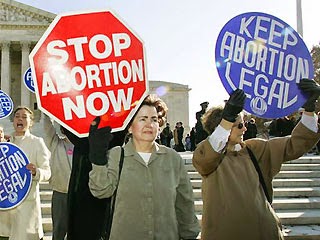
I'm also in favor of everyone having "personal bodily freedom" That's my term for every human being having the freedom to choose what to do about their health and well-being. I know this is anathema to Evangelical Christians and the Republicans who pander to their religious beliefs, and panhandle for their campaign contributions, but overturning Roe v. Wade is wrong, and the rationale for doing so is stupid. "It says that from the very moment of fertilization, a woman has no rights to speak of. A State can force her to bring a pregnancy to term, even at the steepest personal and familial costs." This decision isn't the worst I've seen in my many years of watching one bad decision after another, but it's close, very very close.

Protestors attend the Bans Off Our Bodies rally at the base of the Washington Monument

Well, getting back to the safety net, I think we need to spend more money on education, not on the military (despite my 20 years in the Air Force). And I favor teaching science in our public schools, not hocus-pocus. George W. Bush wants creationism on the curriculum along side evolution. I say, “Nuts!”

Well, I’m rambling, but I’m old and that’s what old folks do sometimes. Now let me tell you what I’m reading. I’m reading an article in my automobile dealer’s magazine, of all things, “Drive,” from Subaru. It’s telling me that today – Saturday, October 7, 2000 – 116 square miles of rain forest will be destroyed; 250,000 newborns will join the World’s exploding population; “at least” 1.5 million tons of hazardous waste will be released into our air, water, and land; Americans alone will throw away enough garbage today to fill the Superdome in New Orleans twice; some 40 to 100 species will become extinct.

I’m a cranky old guy that, like my parents before me, thinks things are getting worse rather than better, and this article is telling me that at the end of today, “the Earth will be a little hotter, the rain a little more acidic and the water a little more polluted…crowded cities will be more crowded and the air…will be a bit dirtier…the web of life will be a bit more threadbare. Tomorrow it starts all over again” Hey, this is my automobile dealer talking to me! Guess what I’m reading in Audubon magazine, for crying out loud!

And speaking of “drive,” I don’t like paying six bucks for a gallon of gas any more than the next guy, but drilling in the Arctic Wildlife Reserve isn’t an option for me. Haven’t we done enough harm to the environment? And half the "cars" I see driving around the Tri-Cities are trucks, or big SUVs. Either buy more fuel efficient vehicles, or buy electric vehicles. Or stop bitching about gas prices!

So here’s my plan: Vote the Republicans out of office – they had their chance and screwed things up royally. Let the Democrats screw things up for a change.

I’m also thinking about meditation. If I understand it, you sit there and try not to think about anything. Hey, that could help. When I told my wife, she said, ”Meditation, hell. You need medication!” She could be right.

Wednesday, September 30, 2015

Money in Politics

Are you passionate about protecting, repealing, reforming X, Y, Z? Good for you. Congress doesn’t care.

A recent study found that little of what's done by the U.S. congress has any correlation whatsoever to the issues and outcomes about which American voters care. What matters to congress is not the opinion of Republicans, or Democrats, or the Tea Party, or the Occupy Movement, or any other average citizen or interest group, but rather the opinion of people and groups with big money.

The study in “Perspectives on Politics” (Sep 2014) by professors Martin Gilens and Benjamin Page of Princeton and Northwestern, respectively analyzed 20 years of data and concluded that “economic elites” and business interests have “substantial independent impacts on U.S. government policy,” while average citizens and interest groups have “little or no independent influence.”

I think most of us knew this in our gut and we didn’t need a research study, or even Donald Trump boasting about it, to know the system is corrupt. During 2015‘s first Republican debate Trump said he gave to everybody, and gesturing to the other nine people on the stage with him said, “When they call, I give. And you know what? When I need something from them...they are there for me.” Then he added, “that’s a broken system.” Donald Trump says some crazy stuff, but he’s right about this -- the system is broken.

People, corporations, PACs, super PACs, and the in-name-only “social welfare” organizations, and their lobbyists untethered by recent U.S. Supreme Court  decisions have poured literally billions into influencing our government. They’ve earned an estimated return in terms of tax breaks and subsidies of 750 times their investment. Nice work if you can get it. And people like Charles and David Koch, and George Soros, and Sheldon Adelson, and Michael Bloomberg, and others like Donald Trump, can and do get it.

Lawrence Lessig, who is the Roy L. Furman Professor of Law and Leadership at Harvard Law School, and director of the Edmond J. Safra Center for Ethics at Harvard University, has written extensively and eloquently on the corrupting influence of unlimited money on American government. Big money has a disproportionate influence on who runs for office, who gets elected, and what gets done or doesn’t get done.

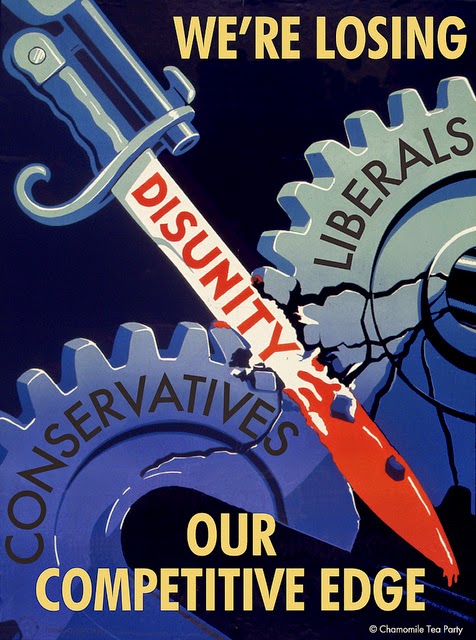
But corruption of the democratic process isn’t the only thing that’s happening. In the unending quest to raise money, the two political parties and their surrogates have resorted to the outreach theme that works best -- fear and anger. Everything has become a “war;” a “war on women,” a “war on coal,” a “war on religion.” The effect on our discourse and culture has been corrosive, creating a hyper-partisan divide that fuels incivility, distrust, and confrontation.

We must get money out of politics not just to save the Republic from its corrupting influence on democracy, but also from its corrosive impact on our American culture. Join one of the many grassroots efforts to take our Republic back. A good one here in our state is WAmend.org, which has fielded an effort promoting a constitutional amendment, I-735, that would eliminate the disproportionate influence of concentrated money and political power on elections and governmental policy.

Wednesday, February 18, 2015

Money in American Politics: Its Effect on How We View One Another

In his commencement address at Syracuse University on May 13, 2012, Aaron Sorkin said.

"Don't ever forget that you're a citizen of this world, and there are things you can do to lift the human spirit, things that are easy, things that are free, things that you can do every day. Civility, respect, kindness, character. You're too good for schadenfreude, you're too good for gossip and snark, you're too good for intolerance—and since you're walking into the middle of a presidential election, it's worth mentioning that you're too good to think people who disagree with you are your enemy."

Unfortunately, the direction of American political dialogue in the age of the Internet is towards more schadenfreude, gossip, snark, and intolerance, not less. The question is, "why?"

Much has written about the corrupting effect of money on democracy in America. Less is written about how all this money effects the way we Americans view one another. Foreigners seem to come away from a visit to America with the view that Americans are a friendly bunch, quick to say thank you, hold the door open, and prone to say, "Have a nice day," to just about anyone. But how friendly are we to one another? And has that changed?
The Supreme Court’s Citizens United decision dramatically increased spending on campaigns and spawned a new wave of political organizations funded by wealthy individuals. Then, in 2014, SCOTUS struck down the limit on the total amount of money wealthy donors could contribute to candidates and political committees. The result of these decisions should be no surprise. According to the Brookings Institute, “When candidate and independent spending are combined, 2014 ranks among the most expensive, if not the most expensive, in history.” And recently the Koch Brothers announced that they plan to spend nearly $900 million on the 2016 election. A billion here, a billion there, and pretty soon you're talking about real money!

Because of all this money flowing into the coffers of congressmen, and candidates, there is a growing sense among everyday Americans that their government does not truly represent their needs, values, nor aspirations, but rather the special interests of those who contribute the most money. Naturally, views differ on whether the result is a government that interferes too readily in the affairs of the public -- is too intrusive, too protective, too burdensome -- or a government that is too permissive of corporate practices that harm people and the environment.
The political parties and their supporters exploit this dichotomy of views in an attempt to wring more money out of contributors like you and I; everyday Americans, who can't compete with the Koch Brothers and their ilk, but feel we have a dog in the fight.

Using TV ads, direct mail, email, social media, and townhall meetings and the like, we are bombarded with the stock and trade of campaign fund raising memes: anger and fear. We are told by the Right that the president is a socialist hell bent on "redistributing wealth" and turning America into a communist state. The Left rails against Republican efforts to turn back the clock on civil liberties, the social safety net, and women's reproductive rights. The campaigns orchestrate outrage over this or that congressman's hypocrisy when their infidelity or insobriety surfaces. If real failings fail to be real enough, elaboration is used, with just enough ambiguity to make allegations juicy without being libelous.

To make matters worse, campaigns and their associated PACs and Super PACs have been collecting massive amounts of data on voters and crafting their messages to push the hot buttons of the demographic most likely to be convinced and to contribute. Workers in the oil and gas industry are told that Al Gore has a huge house, drives an SUV, and flies in his private jet to speaking engagements where he laments global warming. Women collecting food stamps are told that the congressman who demanded they be drug tested was arraigned for possessing cocaine. PETA members see "Sponsored Ads" show up on their Facebook page showing pigs confined to cages, with a link to an article on a Republican-sponsored bill to remove "burdensome regulations" on the treatment of livestock, while ranchers get push notifications about Democratic sponsored legislation that would require eggs be from free range chickens. It's all carefully choreographed to raise your ire and their coffers.
 Campaigns spend a good chunk of the money they collect from donors on "Big Data" and the algorithms that turn it into big propaganda. Frank Pasquale, in his recently published book, The Black Box Society: The Secret Algorithms That Control Money and Information, has written that,

"Every day, corporations are connecting the dots about our personal behavior—silently scrutinizing clues left behind by our work habits and Internet use. The data compiled and portraits created are incredibly detailed, to the point of being invasive."

But more than invading our privacy, an invasion made easier by how wide we fling open the pages of our digital books, these corporations, PACs, Super PACs, campaigns, and candidates are invading our psyche. By telling us that our political opposites are bent on wresting from us no less than our, "life, liberty, and the pursuit of happiness," they are setting us one against the other as not just as political adversaries, but as sworn enemies.
Among the more strident agitators, the National Rifle Association stands out as the best organized, most effective in their narrow issue area -- gun rights -- and most divisive, with their inflammatory rhetoric and wide-ranging attacks on "jack-booted government thugs," and "anti-gun, left-wing activists." As much as anything, the NRA has promoted a 'fear thy neighbor' mentality, and a shoot first, "stand your ground" ethos. But they aren't alone, polemicists on both sides of aisle use hyperbole like a magic wand, turning Americans against each other for the simple purpose of extracting contributions for campaigns. And it never ends.

The enormous amounts of money flowing into the political coffers of campaigns, candidates, PACs, and Super PACs generates a whirlwind that swoops down on Americans, wrests ever more money from them to 'offset the other sides money,' and leaves them twisted against each other.

Mao Zedong (it may have been Sun Yat-sen originally) is credited with saying, "Politics is war without bloodshed, while war is politics with bloodshed."One wonders how long the distinction will hold.

Wednesday, April 2, 2014

McCutcheon v. Federal Election Commission

The FEC loses 5 to 4, and so does government of the people, by the people, and for the people.

Justice Breyer, summarized dissent for himself and Justices Ruth Bader Ginsburg, Sotomayor, and Elena Kagan.

“Today the Court overrules Buckley and strikes down a similar ceiling [on overall contributions] as unconstitutional,” Breyer says. “The Court substitutes for the current two-year overall contribution ceiling of $123,000, the number infinity.”

“If the Court in Citizens United opened a door, today’s decision may well open a floodgate,” he says.
“Taken together with Citizens United, today’s holding, we fear, eviscerates our nation’s campaign finance laws, leaving a remnant incapable of dealing with the grave problems of democratic legitimacy that those laws were intended to support.”
Quid pro quo corruption is not the only danger, Breyer says. “The appearance of corruption accompanying multi-million dollar contributions can make matters worse. The public may come to believe that its efforts to communicate with its representatives or to help sway public opinion have little purpose. And a cynical public can lose interest in political participation altogether.”

“We believe,” Breyer concludes, “that today’s decision substitutes judges’ understandings of how the political process works for the understanding of Congress, fails to recognize the difference between influence resting upon public opinion and influence bought by money alone, overturns key precedent, creates serious loophole in the law, and undermines, perhaps devastates, what remains of campaign finance reform.”

“With respect, we dissent,” he adds.


And so do we, but without the qualifier.

Saturday, May 11, 2013

Reclaiming Our Representative Democracy

Want to reform our gun control laws, expand background checks to close the gun show loophole, limit the size of gun magazines, prohibit assault-stlye semiautomatic weapons, generally reduce gun violence in America? Then it may well be that you have to fix this first.

Friday, July 13, 2012

What is Fairness?


Conservatives take issue with liberals when we argue for fairness in American economic, political, and social life. “Life isn’t fair,” they argue, with more vehemence than I think warranted, but conservatives can get pretty worked up over anything that sounds like socialism, and to them, everything we liberals say sounds like socialism. I think we liberals are partly at fault for this knee-jerk reaction on the part of our conservative friends, because we use the term “fair” too broadly.

So what is fairness? The Federal Communications Commission (FCC) introduced a law in 1949 that required the holders of broadcast licenses to present both sides of controversial issues of public importance. News was to be presented in a manner that was, “honest, equitable and balanced.” The FCC doctrine is no longer with us (that should be obvious), but the words honest, equitable, and balanced constitute a good definition of “fair.” But when we liberals discuss fairness with our conservatives we sometimes misuse the term, or use it imprecisely.

Consider the Occupy Wall Street (OWS) movement, for example. One of their rallying cries is, “We are the 99%.” The slogan refers to the income disparity in America, which has grown significantly since the late 1970s to the point today where the top 1% control 40% of wealth in the U.S. When liberals, who are largely sympathetic to the OWS activists, argue that this isn’t “fair,” conservatives are apt to call us socialists, or worse, communists, who want the state to dole out equal shares to all.


We liberals give conservatives the opportunity to construct this straw man by not being precise in what we’re saying. What we mean is that policy distortions that lead to inequality, such as unregulated or under-regulated financial institutions, the near monopoly power of too-big-to-fail, and preferential tax treatment for special interests, are bad for America. They’ve allowed unethical and even criminal enterprise, decimated the middle class, led to shrinking opportunities to realize the “American Dream,” resulted in a deteriorating infrastructure, and decreased overall economic efficiency. Clearly, this is a nuanced treatment of “fairness,” and in today’s political climate, nuance is rare.


"Corporations are people too, my friend"
On a related issue of fairness, voters, both liberals and even many conservatives I know, question the “fairness” of the unrestricted flow of cash to political parties, candidates, and their surrogates. This flood of money resulted from the 2010 Citizens United case in which the Supreme Court decided (5 to 4) that bans on corporate contributions were unconstitutional, or as Mitt Romney put it, “Corporations are people, too” (the ruling applies to unions and NGOs, as well). Justice John Paul Stevens wrote in his dissent, “The ruling threatens to undermine the integrity of elected institutions across the Nation.” In this sense, when we complain that campaign financing is no longer “fair,” what we mean is that they are not “balanced” -- they allow moneyed interests to wield disproportionate influence on both elections and the elected.

We depend on our elected officials to represent the people, all the people. And yet the median net worth of our congressional “representatives” is almost nine times the typical American household. Fully 250 members of congress are millionaires, and 57 have a net worth that puts them comfortably in the 1%.

The founding fathers, well-read in history, and well-versed in the literature of the French enlightenment and the philosophy of Descartes, Voltaire, Bacon, Locke and Hobbes concluded that successful republics required an equitable distribution of wealth. They knew that where wealth concentrates, political power can never be democratically shared. They knew such a situation to be inherently unfair. And they knew what unfair meant. 

Monday, July 2, 2012

Campaign Finance Takes Another Hit from Republicans


A bill to amend the Federal Election Campaign Act of 1971 to prohibit foreign influence in Federal elections, to prohibit government contractors from making expenditures with respect to such elections, and to establish additional disclosure requirements with respect to spending in such elections, and for other purposes.

Grouped By Vote Position
YEAs ---59
Akaka (D-HI)
Baucus (D-MT)
Bayh (D-IN)
Begich (D-AK)
Bennet (D-CO)
Bingaman (D-NM)
Boxer (D-CA)
Brown (D-OH)
Burris (D-IL)
Cantwell (D-WA)
Cardin (D-MD)
Carper (D-DE)
Casey (D-PA)
Conrad (D-ND)
Dodd (D-CT)
Dorgan (D-ND)
Durbin (D-IL)
Feingold (D-WI)
Feinstein (D-CA)
Franken (D-MN)
Gillibrand (D-NY)
Goodwin (D-WV)
Hagan (D-NC)
Harkin (D-IA)
Inouye (D-HI)
Johnson (D-SD)
Kaufman (D-DE)
Kerry (D-MA)
Klobuchar (D-MN)
Kohl (D-WI)
Landrieu (D-LA)
Lautenberg (D-NJ)
Leahy (D-VT)
Levin (D-MI)
Lieberman (ID-CT)
Lincoln (D-AR)
McCaskill (D-MO)
Menendez (D-NJ)
Merkley (D-OR)
Mikulski (D-MD)
Murray (D-WA)
Nelson (D-FL)
Nelson (D-NE)
Pryor (D-AR)
Reed (D-RI)
Reid (D-NV)
Rockefeller (D-WV)
Sanders (I-VT)
Schumer (D-NY)
Shaheen (D-NH)
Specter (D-PA)
Stabenow (D-MI)
Tester (D-MT)
Udall (D-CO)
Udall (D-NM)
Warner (D-VA)
Webb (D-VA)
Whitehouse (D-RI)
Wyden (D-OR)
NAYs ---39
Alexander (R-TN)
Barrasso (R-WY)
Bennett (R-UT)
Bond (R-MO)
Brown (R-MA)
Brownback (R-KS)
Bunning (R-KY)
Burr (R-NC)
Chambliss (R-GA)
Coburn (R-OK)
Cochran (R-MS)
Collins (R-ME)
Corker (R-TN)
Cornyn (R-TX)
Crapo (R-ID)
DeMint (R-SC)
Ensign (R-NV)
Enzi (R-WY)
Graham (R-SC)
Grassley (R-IA)
Gregg (R-NH)
Hatch (R-UT)
Inhofe (R-OK)
Isakson (R-GA)
Johanns (R-NE)
Kyl (R-AZ)
LeMieux (R-FL)
Lugar (R-IN)
McCain (R-AZ)
McConnell (R-KY)
Risch (R-ID)
Roberts (R-KS)
Sessions (R-AL)
Shelby (R-AL)
Snowe (R-ME)
Thune (R-SD)
Vitter (R-LA)
Voinovich (R-OH)
Wicker (R-MS)

Not Voting - 2
Hutchison (R-TX)Murkowski (R-AK)

Monday, February 22, 2010

Government of the corporations, by the corporations, and for the corporations

More than $3.47 billion was spent lobbying the Federal government in 2009, often driven by political issues central to the age: health care reform, financial reform, energy policy. That’s more than a 5% increase over $3.3 billion worth of federal lobbying recorded in 2008, the previous all-time annual high for lobbying expenditures.

In the 4th quarter of 2009, lobbying expenditures increased nearly 16 percent over 4th quarter levels from 2008. Those 4th quarter expenditures marked the first quarter in U.S. history that federal lobbying expenditures cracked the $900 million mark, hitting a record $955.1 million for the quarter.

At nearly $266.8 million, the pharmaceutical and health products industry’s federal lobbying expenditures not only outpaced all other business industries and special interest areas in 2009, but stand as the greatest amount ever spent on lobbying efforts by a single industry for one year.

Photograph shows the D.C. lobbying and law firm Patton Boggs New York office at the Stevens Tower, at 1185 Avenue of the Americas.

September 11, 2001 Re-imagined Redux

Back in May, President Trump abruptly dismissed "dozens national security advisors from US National Security Council (NSC). NPR reporte...